
Procurement Manager Career Advancement: Skills for 2026
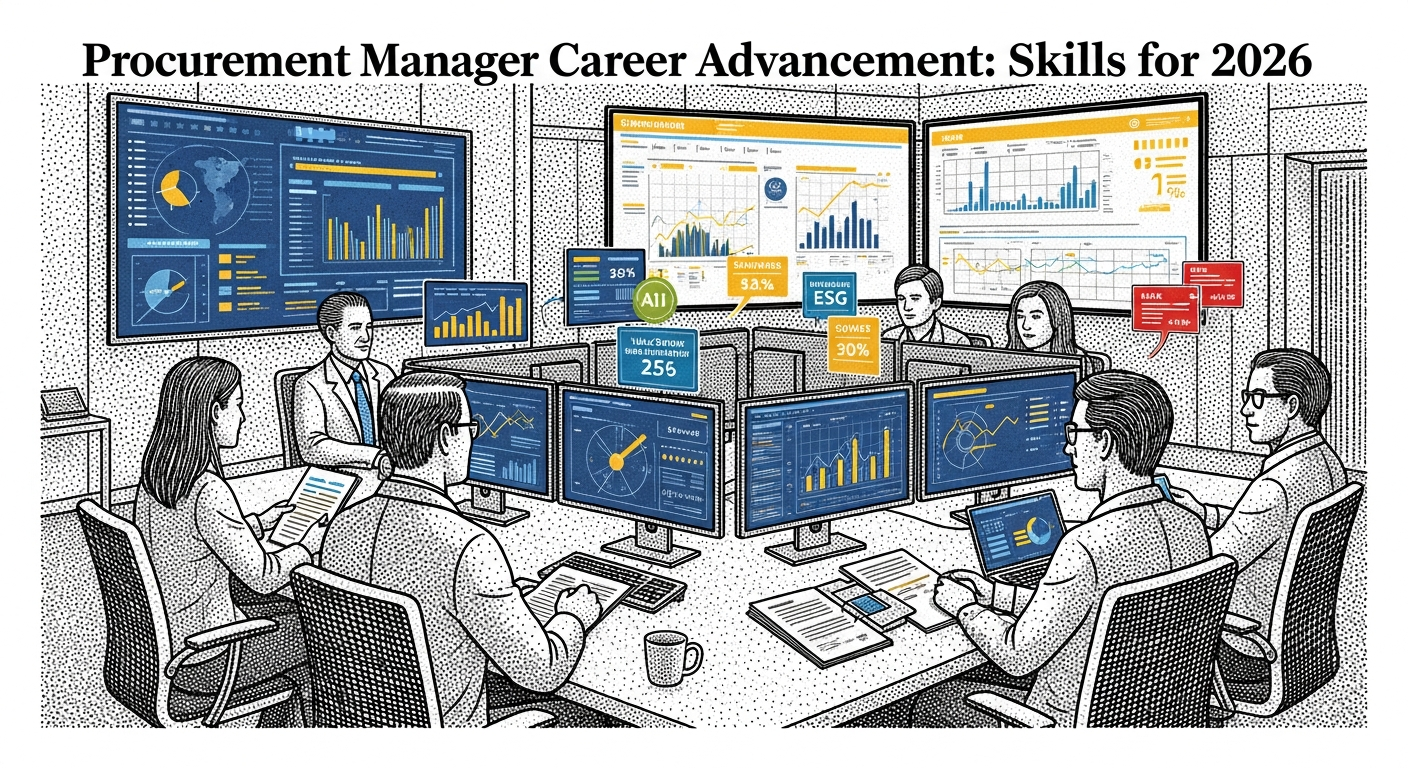
The CPO seat has never been harder to earn, or easier to lose. As analyst firms like The Hackett Group and Spend Matters release their procurement provider rankings, one message cuts through the noise: the vendors shaping procurement's future are all betting on AI, digital integration, and strategic resilience. Procurement managers who aren't fluent in those same disciplines won't be leading organizations. They'll be watching someone else do it.
Why the Hackett Lists Matter for Your Career
The Hackett Group's annual provider rankings aren't just a vendor scorecard. They're a mirror. The capabilities these firms invest in, autonomous sourcing, predictive risk analytics, AI-driven spend visibility, reflect exactly what procurement leadership teams are buying, and by extension, what they expect their own people to deliver.
When a CPO signs a contract with a platform on the "50 to Know" list, they need internal champions who can operationalize it. That's the opening for ambitious procurement managers. The question is whether you're positioned to step into it.
"The vendors shaping procurement's future are all betting on AI, digital integration, and strategic resilience, and so are the organizations hiring CPOs."
The Three Skills Defining Procurement Manager Career Advancement
Career progression in procurement used to reward negotiators and relationship managers. In 2026, those skills are necessary but no longer sufficient. Three competencies now separate managers who plateau from those who reach the executive table.
1. AI Literacy, Not Just Awareness
Knowing that AI exists in procurement tools is table stakes. What hiring committees and sitting CPOs want is fluency: the ability to evaluate AI-driven platforms, interpret model outputs, and make judgment calls when the algorithm is wrong. That last part matters most.
Procurement managers advancing fastest right now can articulate the difference between supervised and unsupervised machine learning in a sourcing context, understand where hallucination risk lives in generative AI tools, and challenge vendor claims with informed questions. That's not a technology skill. That's a leadership skill.
According to the Deloitte 2025 Global CPO Survey, top-performing procurement organizations ("Digital Masters") allocate up to 24% of budgets to technology and report 3.2x returns on GenAI investments, yet the top barriers to value delivery remain siloed ways of working (57%), competing priorities (46%), and talent gaps (34%).
2. Digital Transformation Knowledge
Every procurement organization is somewhere on the digital transformation journey. The managers who advance are the ones who understand where their organization sits, and can build a credible roadmap to the next stage.
This means working knowledge of procurement tech stacks: source-to-pay platforms, contract lifecycle management systems, supplier relationship management tools, and how they integrate with ERP infrastructure. It also means change management. Technology deployments fail because of people, not software. Managers who can lead both the technical and human sides of a transformation become indispensable.
3. Strategic Resilience Planning
Supply chain disruption is no longer an exception. It's the operating environment. The COVID-era scramble exposed how many procurement organizations were optimized purely for cost, and how badly that strategy failed when geopolitical shocks, port closures, and supplier insolvencies hit simultaneously.
Procurement managers serious about advancement need to demonstrate command of supply chain resilience strategies: dual sourcing frameworks, supplier financial health monitoring, geographic diversification, and scenario planning. CPOs are looking for people who think in risk-adjusted terms, not just price-per-unit.
What Modern CPO Responsibilities Actually Require
The CPO role has expanded dramatically over the past five years. Today's chief procurement officers are expected to contribute to ESG reporting, advise on M&A due diligence, manage supplier diversity programs, and present to boards on supply risk. The job is as much strategic advisor as operational leader.
For procurement managers mapping a path to that role, the implication is clear: functional excellence alone doesn't get you there. You need cross-functional credibility, the ability to speak finance, speak risk, and speak sustainability without losing the operational thread.
- Financial acumen: Understand how procurement decisions flow to EBITDA, working capital, and cash conversion cycles. CFOs notice when procurement leaders speak their language.
- Executive communication: Translate complex supplier risk or AI implementation plans into board-ready narratives. Brevity and clarity are career accelerants.
- Supplier relationship depth: Strategic sourcing at the CPO level is about long-term partnership architecture, not transactional leverage. Build supplier relationships that survive market stress.
- Data governance: Own the quality and integrity of procurement data. Bad data produces bad AI outputs and bad decisions. CPOs who inherit clean data environments are rare, and grateful.
- Change leadership: Transformation initiatives stall without internal advocates. Managers who build coalitions and manage resistance move up faster than those who simply execute directives.
Strategic Sourcing as a Career Differentiator
Strategic sourcing remains the core discipline of procurement leadership, but its definition has shifted. In 2026, strategic sourcing encompasses supplier innovation programs, joint business planning, and total value of ownership models that go well beyond unit cost reduction.
Procurement managers who build visible track records in strategic sourcing, documented savings, supplier-led innovation wins, risk mitigation outcomes, create the portfolio that CPO searches demand. Every major sourcing initiative is a career asset. Treat it that way.
The Hackett Group's recognized providers in the "Future 5" category are largely focused on next-generation sourcing intelligence: real-time market pricing data, AI-assisted RFP generation, and supplier performance prediction. Managers who pilot these tools internally and document results are building exactly the kind of innovation credentials that accelerate advancement.
Your 2026 Career Readiness Checklist
Use this framework to audit your current position and identify the gaps between where you are and where CPO-track candidates need to be.
- AI literacy assessment: Can you evaluate a procurement AI vendor's claims with informed skepticism? Have you led or participated in an AI tool implementation?
- Digital transformation exposure: Have you contributed to a platform migration, integration project, or digital roadmap in the last 24 months?
- Resilience credentials: Do you have documented experience building or stress-testing a dual-source strategy, supplier risk framework, or business continuity plan?
- Executive visibility: Have you presented procurement strategy or risk analysis to senior leadership or a board-level audience in the past year?
- Market intelligence habits: Are you tracking provider innovation through sources like the Hackett Group rankings, Gartner Magic Quadrants, and peer community benchmarks, and translating that intelligence into internal recommendations?
If you can answer yes to three or more, you're on track. If fewer than three, you have a clear development agenda for the next 12 months.
The Window Is Narrow, And Open
Procurement is having its moment. Organizations that once treated the function as a cost center are repositioning it as a strategic nerve center, for risk management, innovation access, and ESG performance. That elevation creates real opportunity for managers who arrive prepared.
The latest analyst rankings confirm that the vendor ecosystem is racing ahead. The procurement professionals who study those lists, understand what those platforms do, and build the internal credibility to lead their adoption will be the CPOs of 2027 and 2028.
The ones who don't will be explaining to a new CPO why the transformation is taking so long.
Stay current on procurement leadership, emerging technology, and career strategy, subscribe to the SourcingTomorrow weekly briefing and get the intelligence CPO-track professionals rely on.
Frequently Asked Questions
- What skills matter most for procurement manager career advancement in 2026?
- AI literacy, digital transformation knowledge, and strategic resilience planning are the three competencies that most directly accelerate advancement to CPO-level roles. Functional sourcing expertise remains essential but is no longer sufficient on its own. Managers who combine operational depth with executive communication and cross-functional credibility move fastest.
- Why do the Hackett Group procurement provider rankings matter for career development?
- The Hackett Group's annual lists — including '50 to Know,' '50 to Watch,' and 'Future 5' — reflect where leading organizations are investing in procurement technology. Understanding these platforms and their capabilities signals market intelligence to hiring CPOs and positions managers as internal innovation leaders. Tracking these rankings is a practical way to stay ahead of what your organization will need next.
- What does a modern CPO actually do that differs from traditional procurement leadership?
- Today's CPOs contribute to ESG reporting, advise on M&A due diligence, manage supplier diversity programs, and present supply risk analysis to boards. The role has expanded well beyond cost management into strategic advisory functions. Procurement managers preparing for CPO roles need cross-functional credibility in finance, risk, and sustainability — not just sourcing expertise.
- How can procurement managers build AI literacy without a technical background?
- Start by participating in or leading a procurement AI tool evaluation or pilot implementation. Learn to ask informed questions about model outputs, data quality, and error rates — skills that require business judgment, not coding. Vendor webinars, Hackett Group research, and peer community forums like SourcingTomorrow are practical starting points for building working fluency.
- How does strategic sourcing experience contribute to CPO career advancement?
- Strategic sourcing track records — documented savings, supplier innovation wins, and measurable risk mitigation outcomes — form the professional portfolio that CPO searches evaluate. Every major sourcing initiative is a career asset when the results are clearly articulated. Managers who also pilot next-generation sourcing tools and document outcomes build the innovation credentials that accelerate advancement.
Join the Discussion
Get procurement insights, sourcing strategies, and supply chain intelligence delivered to your inbox.
Subscribe to the Newsletter